
Inspect the failed area
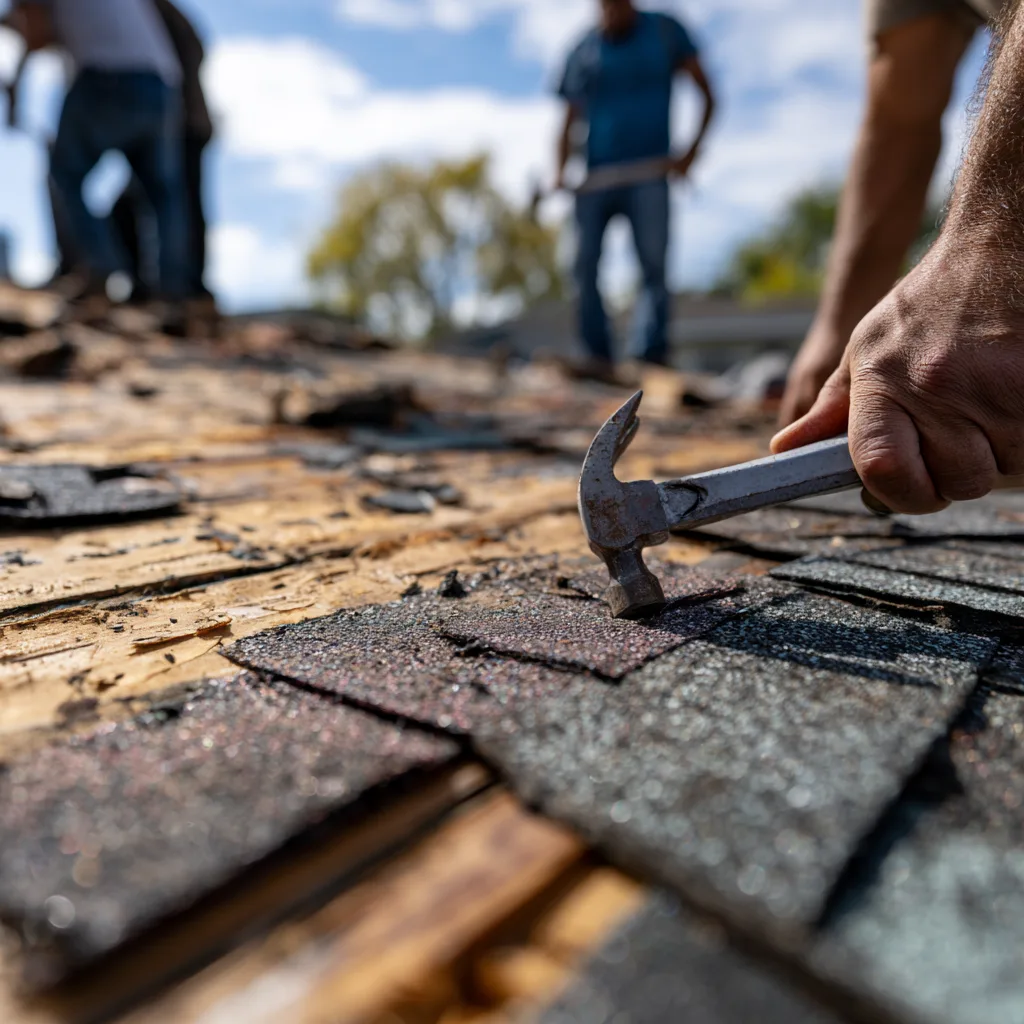
A roof walk checks the likely entry point and related details when the roof is safe to access.
Gladstone, MO
A leak can spread below the roof before it appears indoors. We look for the opening and the condition around it so the repair addresses the roof, not just the visible stain.
Rain can enter beside a pipe, at a wall or through damaged shingles, then run along wood before it drips into a room. That is why the ceiling mark and the roof opening do not always line up. We follow the likely path and examine the details above it.
A sound repair restores the way the roof sheds water. It might mean replacing a failed pipe boot, rebuilding flashing or removing damaged shingles and the affected layers below them. Adding sealant over an unresolved joint leaves the underlying failure in place.
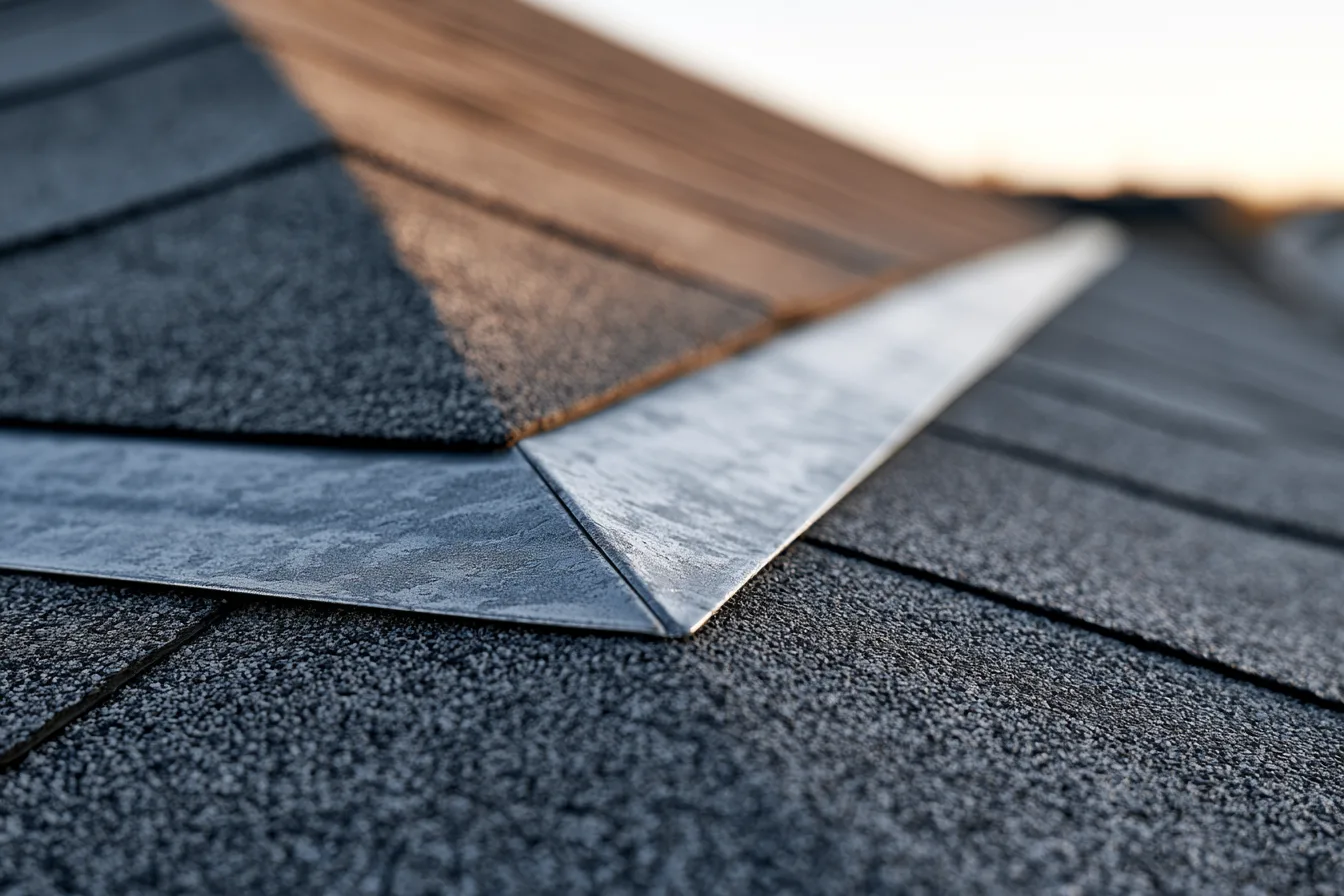
Different failures call for different work, even when they leave similar stains inside.
Damaged tabs and affected fasteners are removed so compatible shingles can be fitted into the courses. The repair needs to shed water through the same overlaps as the original roof.
A split collar allows water to follow the plumbing vent. The boot’s metal base, the adjoining shingles and the wood below determine whether the entire flashing unit and nearby material need replacement.
Step flashing works between shingle courses at a wall; counterflashing protects the top of that connection. Repair can require opening the adjoining roof and wall detail to restore those laps.
Water concentrates in valleys and at eaves. Damaged valley material, an exposed fastener or a poorly joined roof edge needs the surrounding layers checked while it is open.
A small visible defect does not always mean a small repair. We explain the finding that changes the work.
| Finding | Why it matters | How the scope changes |
|---|---|---|
| Workable surrounding shingles | They can be lifted and joined without creating new breaks. | A localized repair can reconnect to the existing roof. |
| Brittle or mismatched material | Opening one area damages adjacent tabs or leaves incompatible laps. | More material needs replacement to reach a sound connection. |
| Soft decking or damaged underlayment | The surface patch would cover a weak or wet base. | The affected layers are opened and damaged wood is repaired. |
| Deterioration across a slope | Separate patches leave worn roofing between the repairs. | Price a larger section or replacement alongside repeated local repairs. |
The part that failed is only one piece of repair cost. The amount of roof that must be opened and restored is just as important.
Read the roof cost guidePitch, height and the position of a chimney or wall change the labor needed to reach and rebuild the joint.
Wood damage, underlayment replacement and the availability of compatible shingles widen the work. Repairs do not use the whole-roof calculator’s square-foot rate.
Tell us where water appears and roughly when you noticed it. We take the diagnosis from there.
A roof walk checks the likely entry point and related details when the roof is safe to access.
The work extends far enough to reach sound material and restore the roof’s laps, flashing and fastening.
Damaged material is addressed within the agreed scope. Newly exposed wood damage is a scope change to resolve before covering it.
Yes, when compatible shingles are available, the adjoining roofing is workable and the repair can attach to sound decking and flashing. If those conditions are missing, the area of work needs to grow.
Stay off a damaged or wet roof. Keep people away from sagging ceilings and water near electrical fixtures. Tell us if water is coming in now so temporary protection can be discussed without promising a particular arrival time.
Weathering and product changes affect the appearance of a repair. Compatible material is needed for the roof system, but a repaired area can look different from the surrounding shingles.
Gladstone Roof Pros
Tell us the room, the property location and what you noticed. You do not need to find the roof opening yourself.
(816) 439-0392